

[ad_1]
The near-unanimous answer to that question is birthing a new hospitality format around the world.
The anti-café is an attempt to acknowledge that many café patrons aren’t looking primarily for food and drink, but for a place outside their homes where they can spend some free time, meet friends, read, daydream or have chance encounters with strangers.
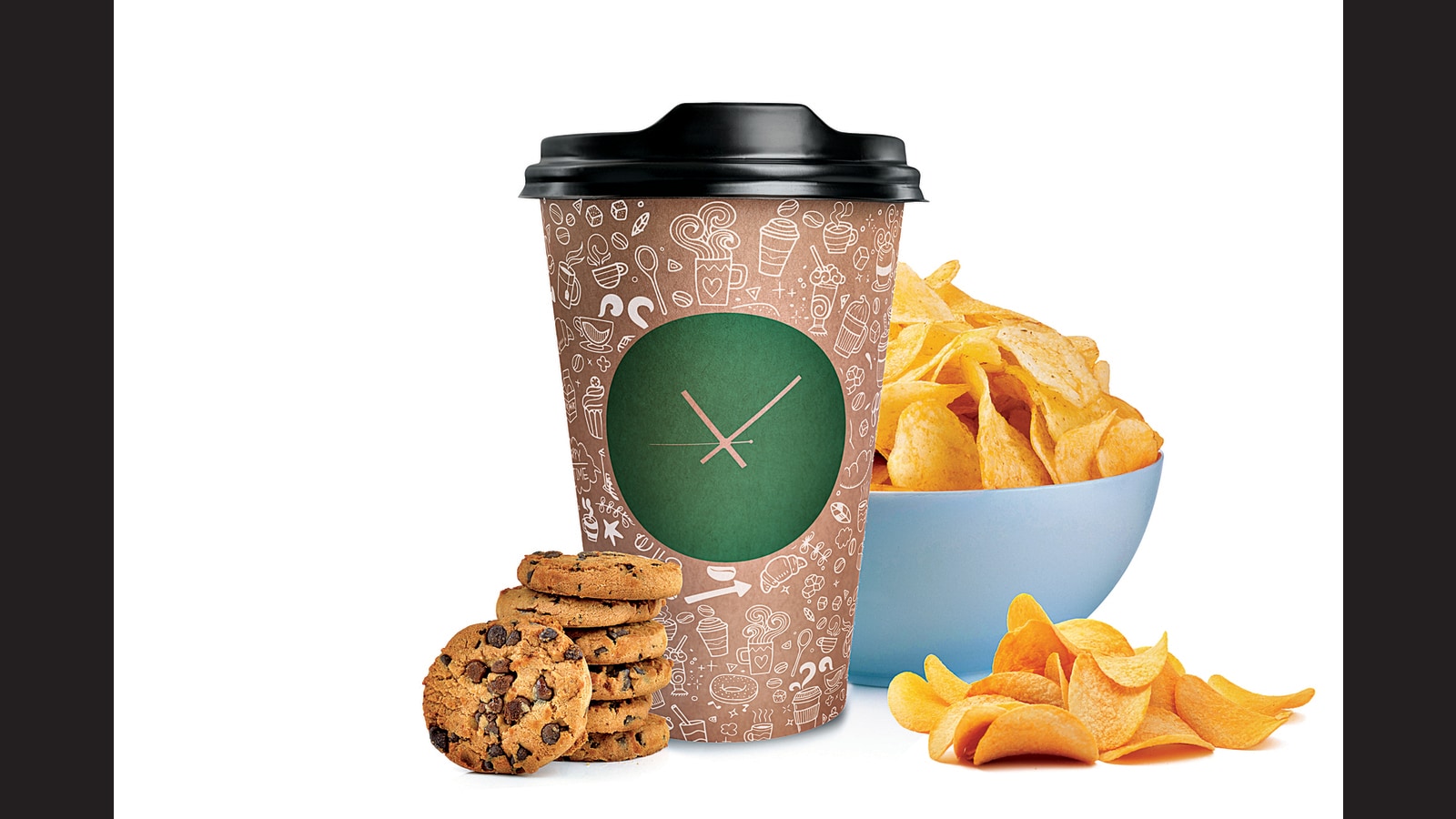
The anti-café, therefore, charges not by the menu item but by the hour. Tea, coffee, cookies and chips are often included, as is access to wifi, books and games. Some anti-cafés allow guests to bring their own food. Rates in India vary from ₹60 to ₹170 per person per hour.
Interestingly, one of the earliest of these was set up in Russia. The Ziferblat or Clockface chain, launched in Moscow in 2011, offers visitors free coffee, wifi, books and a piano, and charged by the minute. The chain currently runs six outlets in cities across that country.
Founder Ivan Mitin calls them “loose spaces”; others have opted for terms such as pay-per-minute café, non-café and time club. “Anti-café” is the most popular, and in the years since Ziferblat, the format has taken root in London, Paris, Berlin, Bordeaux, Slovenia and Manchester.
In India, there are anti-cafés in Chennai, Pune, Kochi, Hyderabad and Guwahati.
Bengaluru had the first two in India. The Minute Bistro was set up in 2015 and Dialogues Café, in 2016, but the former has since shut and the latter now operates as a co-working space.
Unsurprisingly, the format has not been popular in exorbitant real-estate markets. New York, Tokyo and Mumbai aren’t currently home to any.
Tokyo does have a time-based model, incidentally, but it is uniquely Japanese in its approach. The “anti-procrastination café” comes with free tea and coffee. But when a patron signs in, they also state their work goal for the day — and opt for mild or heavy doses of “intervention”. Staff members then periodically come over to check on progress and remind the user not to “waste” the time that they have paid for.
We at Wknd were intrigued to learn of this format, and felt compelled to share it, but let us return now to the story of the anti-café.

The why
It was a trip to a time club in Paris, and before that a co-working space in San Francisco, that inspired Vandita Purohit to start Mauji – The Time Cafe & Spaces in Pune, in 2020. (Mauji is Hindi for Happy-Go-Lucky.)
Purohit, 37, had by then run her co-working space, Daftar, for five years. “The time café in Paris was part of a co-working facility, but it was meant specifically for people who wanted to spend time outside their home but not at work. Before that, at a co-working space in San Francisco in 2015, I had seen a lot of interaction between absolute strangers, and this feeling of community, which I wanted to recreate.”
Mauji offers books and board games, a swing and an al fresco area, free beverages and a snack bar (cookies, chips, dips, cake, bread, butter, jam and a toaster), for ₹170 per hour.
“The idea is to spare guests the judgement that comes with sitting at a restaurant without ordering any food. Why should anyone be made to feel guilty if they’re not hungry after one lemonade,” asks muralist Aathira Mohan, 28, who set up GVQ Café (from the Malayalam jeevikku, meaning “to live”) on her family’s farm in Kalamassery, in Greater Kochi, in 2023, after returning home from Bengaluru during the pandemic.
This is a 2,000-sq-ft space with free beverages and crepes with fruit and chocolate fillings, for ₹150 for the first hour and ₹1 per minute thereafter. There is a paid menu one can order from too (sandwiches, toast, omelettes, beverages). At both Mauji and GVQ, people may bring their own food, which attendants can help them heat up.

For architect Akshaya ChittyBabu, 29, the idea for Backyard, opened in 2017, was an extension of her final-year architecture school thesis on co-ideation spaces. “The idea was to create a place where creative people of different interests and passions could have the kind of interaction that occurs at a school or college canteen or break room,” she says.
In addition to the endless beverages and changing paid menu (bakes, salads, sandwiches, coolers), Backyard has rolls of butter paper hanging off the walls, so patrons can “note down instant ideas”; a communal table; blackboards, books, board games; and a display zone where patrons can showcase their work. Prices start at ₹300 for a two-hour pass.
The add-ons
At Pay Per Minute in Guwahati, set up by pharmaceuticals businessman Sanjay Agarwalla in 2023, food plays a fairly crucial role, but there is still no menu. Instead, PPM offers an all-you-can-eat buffet. The menu changes every day; the buffet costs ₹15 per minute.
It was inspired by his frequent visits to the airport to pick up his daughters, who study in Rajasthan. “There, they charge you by the hour first for parking, and then by the minute,” says Agarwalla, 45. “I wondered if I could do the same for a restaurant.”
This isn’t strictly an anti-café. Patrons are welcome to lounge if they like, but, he admits, at ₹900 per hour, the food would be the mission.
The Lemerian Workin Café in Hyderabad, meanwhile, is designed as a sort of break room for the exhausted professional. Opened by exports consultant Shaikh Arbaaz Ali, 28, and his mother, Ayesha Ali, 47, in 2023, it offers a lounge / co-working area, a restaurant area, and a resting zone with couches . Prices start at ₹60 per hour. Daily, weekly and monthly passes come with some free beverages; the latter two also come with discounts on food.
“We’re happy to serve those simply looking for a change of scene for a few hours,” Arbaaz Ali says.
The who
There have been some happy surprises in the clientele. In addition to working professionals and students, senior citizens are coming in to chat and relax in groups, or read by themselves.
Purohit of Mauji says she knew she’d created a “safe space” when a guest came in, had a lemonade, and then just napped for the rest of their hour. “It was a really hot day,” she adds, laughing. “Another time, a young couple came in, watched a movie through shared headphones on one of our couches, and left. It was such a sweet sight.”
The simple paid menu helps the café break even, the entrepreneurs admit.
Often, even those who bring their own food will order a little something, and that goes a long way, adds Mohan of GVQ. “I think people like to know they have the option of bringing their own food and the option of unlimited cups of coffee. They like knowing that nobody will badger them once their coffee is over. And so far the collaboration is working for both sides,” she says.
What should a city have instead of ant-cafés? Say it with us: well-built public spaces. To see where these new formats fit into urban-planning theory, click here.
[ad_2]
Source link